 Cre_une_image_qui_montre_hazard_vs_risk__understan_delpmaspu.png
Risk management is the systematic process of identifying, assessing, and controlling threats to an organisation's earnings and capital.
In the IT world, cybersecurity risk management focuses on identifying vulnerabilities and mitigating threats to protect sensitive data and systems.
Effective risk management ensures business continuity, protects assets, and guides strategic decision-making.
A risk is defined as the effect of uncertainty on your objectives
- Teacher: Leila AMRANE

Waterfall is a linear and sequential project management approach where each phase must be completed before the next begins.
Main characteristics:
-
Clear, fixed requirements at the beginning
-
Phases follow a strict order: Requirements → Design → Implementation → Testing → Deployment → Maintenance
-
Changes are difficult and costly once the project has started
-
Best for well-defined, stable projects
✅ Suitable for: construction projects, government systems, or projects with fixed scope.
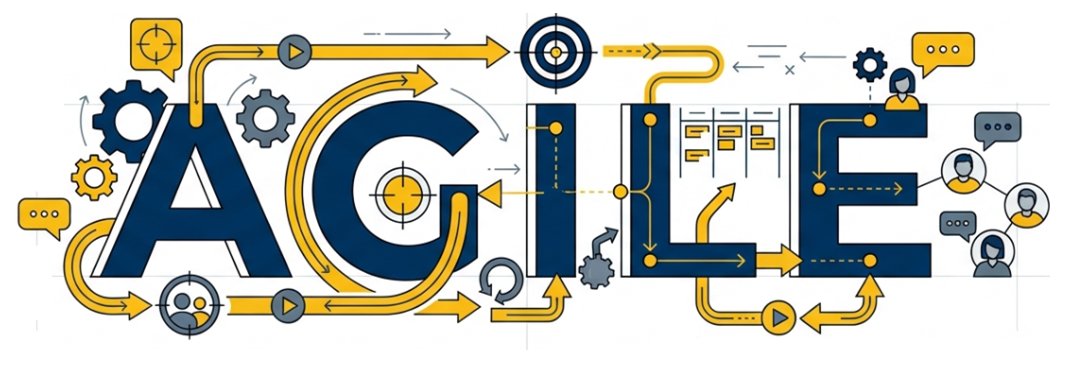
Agile is an iterative and flexible approach that delivers work in small increments called sprints.
Main characteristics:
-
Work is divided into short cycles (usually 2–4 weeks)
-
Continuous feedback from customers
-
Changes are welcome, even late in development
-
Focus on collaboration and adaptability
Popular Agile frameworks include Scrum and Kanban.
✅ Suitable for: software development, startups, and projects with evolving requirements.
- Teacher: Leila AMRANE
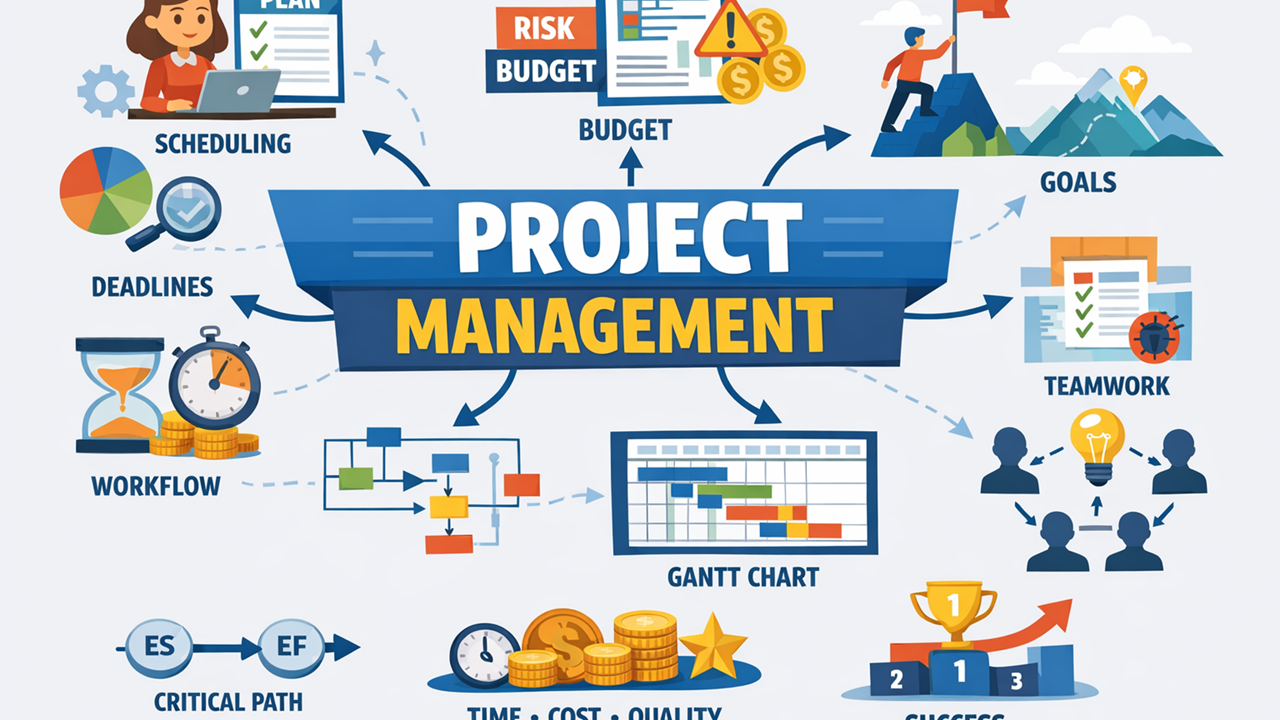
Project management involves applying knowledge, skills, tools, and techniques to project activities in order to meet project requirements. It ensures that tasks are completed efficiently, risks are managed, and objectives are achieved according to scope, cost, and quality constraints. Effective project management improves teamwork, communication, and overall project success.
- Teacher: Leila AMRANE