
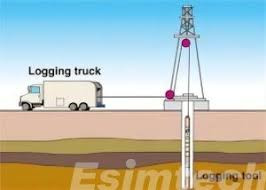
Short Description of Well Logging Tools in Oil and Gas Production:
Well logging tools are instruments used to measure the physical, chemical, and petrophysical properties of subsurface rock formations and fluids within a borehole. These tools are run into the well on a wireline or during drilling to collect continuous records (logs) that help evaluate reservoir potential and optimize production.
Main Types of Well Logging Tools:
-
Resistivity Logs: Measure electrical resistivity to distinguish between hydrocarbon-bearing, water-bearing, and non-porous zones.
-
Gamma Ray Logs: Detect natural radioactivity to identify shale and clean formations.
-
Density Logs: Use gamma rays to determine formation bulk density and estimate porosity.
-
Neutron Logs: Measure hydrogen content to estimate porosity and fluid type.
-
Sonic (Acoustic) Logs: Measure the travel time of sound waves through rock to estimate porosity and mechanical properties.
-
SP (Spontaneous Potential) Logs: Record natural voltage differences to identify permeable zones and formation boundaries.
-
Caliper Logs: Measure borehole diameter to detect washouts and casing conditions.
These tools collectively help in formation evaluation, reservoir characterization, and well completion decisions.
- Teacher: Nabil BRAHMIA