
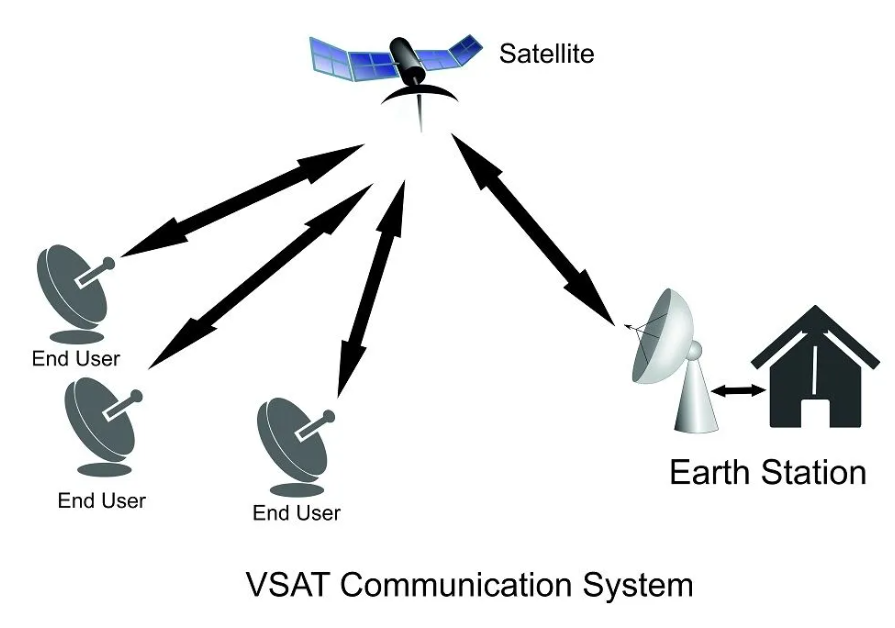
Very Small Aperture Terminal (VSAT) technology represents one of the most significant developments in modern satellite communications, particularly in regions lacking reliable terrestrial infrastructure. As the demand for fast, secure, and wide-coverage communication services increases, VSAT systems have emerged as an effective solution, offering users data, voice, and internet connectivity over vast geographical areas. Their relatively small antenna size, ease of installation, and reduced operational cost have made them highly suitable for commercial, governmental, and industrial applications.

Despite their compact design, VSAT stations operate within a larger satellite communication network and rely on a central ground station known as a Hub. The Hub manages network configuration, controls traffic, monitors terminal performance, and ensures service reliability. As a result, VSAT technology plays a crucial role in extending global communication capabilities, supporting remote communities, financial networks, research institutions, and many other critical services.
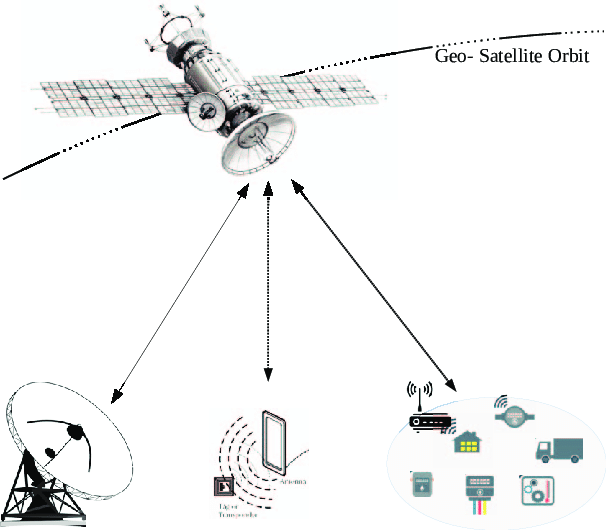
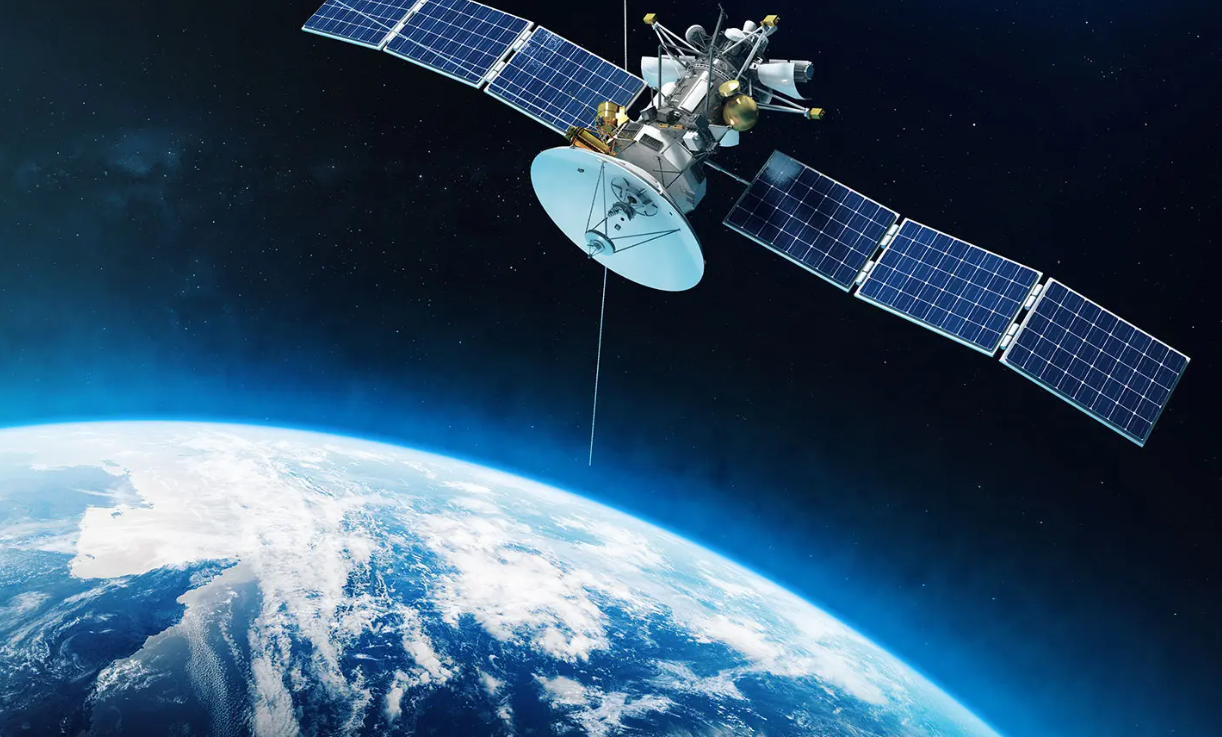
 

Satellite communication technologies have revolutionized global connectivity, enabling reliable data transmission across vast distances and challenging environments. These systems rely on complex networks of ground stations, satellites, and user terminals, working together to provide services such as telecommunications, broadcasting, and internet access. The efficiency of satellite communication systems is largely determined by the design and performance of the satellite link, which includes factors such as transmission power, frequency, antenna design, and the physical properties of the communication channel. A key aspect of understanding and optimizing these systems is the concept of Link Budget, which accounts for all the gains and losses in the transmission path.

In the study of satellite communication, it is essential to analyze the Elements of the Link Budget, which include factors such as transmission loss, signal power, and receiver sensitivity. Transmission loss, caused by factors like atmospheric absorption and free-space path loss, can significantly impact the signal quality and overall performance of the system. The design of the Antennas at both the transmitter and receiver is crucial in overcoming these losses, as antennas focus and direct the radio waves to maximize signal strength and minimize interference. Transmitters, which generate and amplify the signal, also play a key role in ensuring the signal reaches the satellite with sufficient power for reliable communication. Understanding these elements is fundamental for optimizing satellite communication systems and ensuring they meet the necessary performance standards.

Dr.CHENINA Hachemi

The use of satellites in communication systems is an integral part of daily life, as evidenced by the many homes equipped with antennas, or "satellite dishes," used for space communication. What may not be as well known is that satellites are an essential part of global telecommunications systems, carrying large volumes of data and telephone traffic in addition to television signals.

Satellites offer a number of features that are not easily available with other means of communication. Because very large areas of the Earth are visible from a satellite, it can serve as the central hub of a communication network, simultaneously connecting many users who may be widely separated geographically. This same feature allows satellites to provide communication links to remote communities in sparsely populated areas that are difficult to access by other means. Of course, satellite signals bypass both political and geographical borders, which may or may not be a desirable feature.

In this introductory chapter, we will generally discuss satellite telecommunication systems by focusing on the satellite itself, the components of a satellite, the different types of orbits followed by satellites, and the various methods of distributing satellites in a constellation to ensure global coverage. Finally, we will conclude this chapter with system optimization, aimed at reducing the overall system cost and addressing inter-satellite links.

Dr.CHENINA Hachemi