
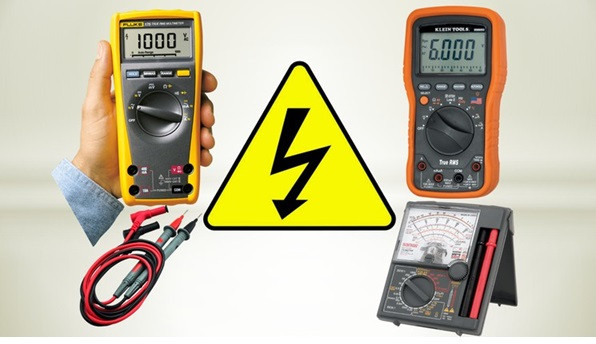
Practical work in electrical and electronic measurements involves hands-on experiments using tools like multimeters, oscilloscopes, and wattmeters to measure voltage, current, resistance, power, and component characteristics, focusing on safety (power off for resistance), correct range selection, calibration, and troubleshooting circuits, with common labs including measuring basic component values, verifying Ohm's law, and determining power factor. Key aspects are following circuit diagrams, gradual power application (Variac), noting readings, calculating errors, and understanding measurement principles, ensuring accuracy and safety.