
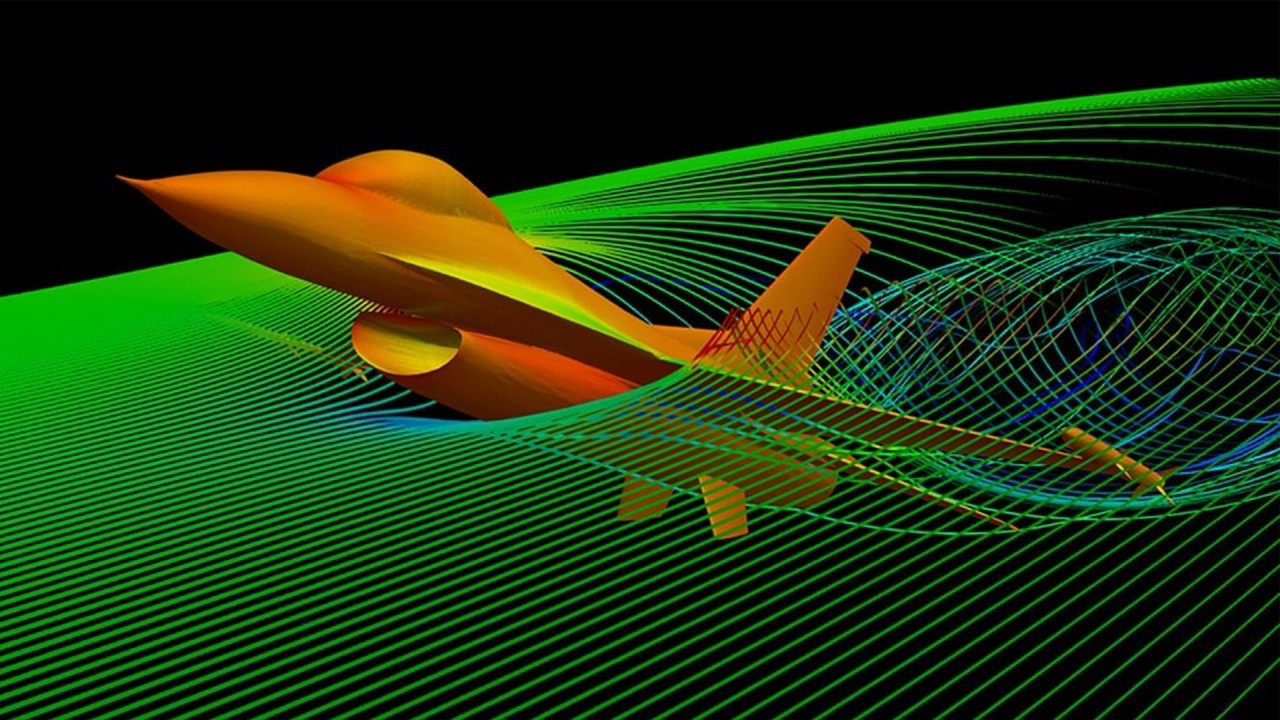
This course, authored by Dr. Hocine Belahya, is a comprehensive handout designed for first-year Master's students in Mechanical and Energy Engineering. Its primary objective is to equip students with the fundamental concepts of computational engineering, specifically mastering the Finite Volume Method (FVM) for solving transport phenomena.
The course is structured to guide students from the physical principles of transport to the implementation of numerical algorithms. It begins by establishing the theoretical foundation with the general convective-diffusive transport equation and the analogies between the laws of diffusion for heat, mass, and momentum. It then introduces the core philosophy of the finite volume method, emphasizing its conservative nature, the importance of mesh selection, and the treatment of boundary conditions and interface coefficients.
The core of the handout delves into the application of FVM. It starts with steady-state diffusion problems (like heat conduction) to illustrate the basic discretization process. It then progresses to the more complex convection-diffusion problems, where it systematically presents various numerical schemes for handling convective terms, ranging from basic ones like Upwind and Centered schemes to higher-order methods like QUICK and TVD to ensure accuracy and stability.
A significant portion of the course is dedicated to solving the incompressible Navier-Stokes equations. It addresses the critical "checkerboard" pressure problem by introducing staggered grids and detailing the most widely used pressure-velocity coupling algorithms, including SIMPLE, SIMPLER, SIMPLEC, and PISO. Finally, the course covers the practical aspect of solving the resulting systems of discretized algebraic equations, discussing direct methods (like the TDMA for 1D problems) and iterative methods (Jacobi, Gauss-Seidel), along with essential techniques for ensuring convergence such as relaxation factors.
- Teacher: Hocine BELAHYA
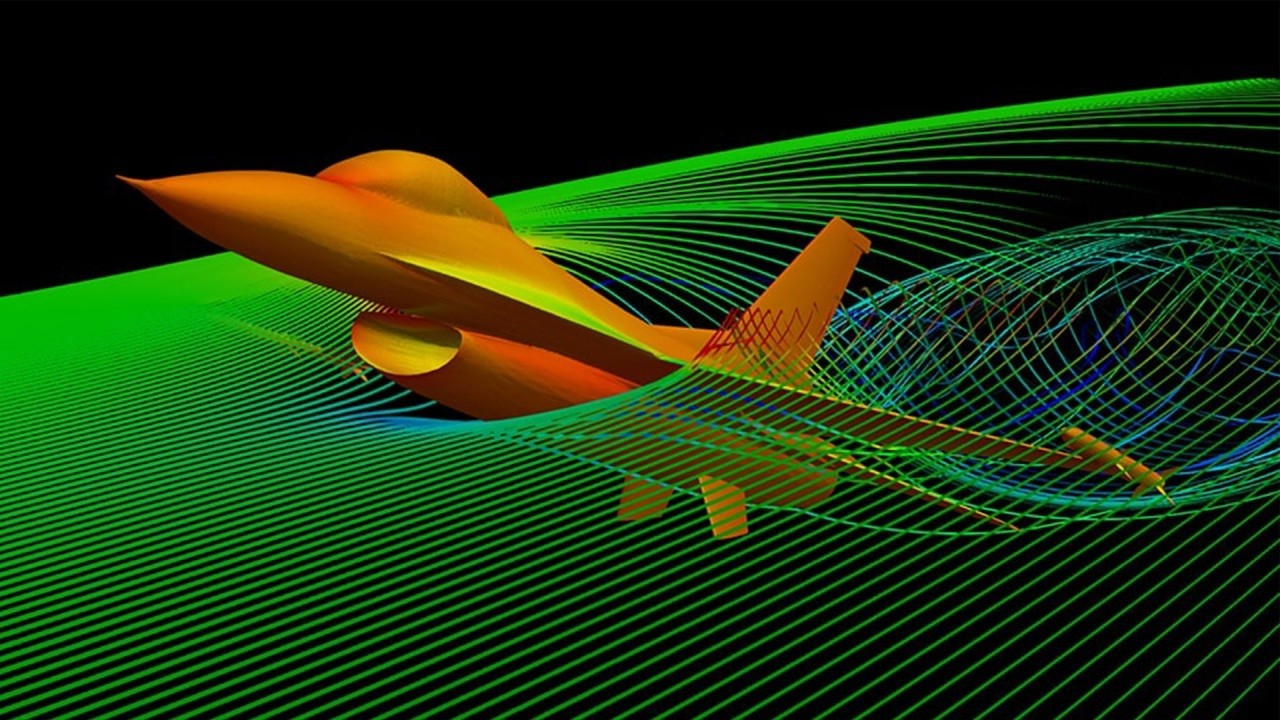
This course, authored by Dr. Hocine Belahya, is a comprehensive handout designed for first-year Master's students in Mechanical and Energy Engineering. Its primary objective is to equip students with the fundamental concepts of computational engineering, specifically mastering the Finite Volume Method (FVM) for solving transport phenomena.
The course is structured to guide students from the physical principles of transport to the implementation of numerical algorithms. It begins by establishing the theoretical foundation with the general convective-diffusive transport equation and the analogies between the laws of diffusion for heat, mass, and momentum. It then introduces the core philosophy of the finite volume method, emphasizing its conservative nature, the importance of mesh selection, and the treatment of boundary conditions and interface coefficients.
The core of the handout delves into the application of FVM. It starts with steady-state diffusion problems (like heat conduction) to illustrate the basic discretization process. It then progresses to the more complex convection-diffusion problems, where it systematically presents various numerical schemes for handling convective terms, ranging from basic ones like Upwind and Centered schemes to higher-order methods like QUICK and TVD to ensure accuracy and stability.
A significant portion of the course is dedicated to solving the incompressible Navier-Stokes equations. It addresses the critical "checkerboard" pressure problem by introducing staggered grids and detailing the most widely used pressure-velocity coupling algorithms, including SIMPLE, SIMPLER, SIMPLEC, and PISO. Finally, the course covers the practical aspect of solving the resulting systems of discretized algebraic equations, discussing direct methods (like the TDMA for 1D problems) and iterative methods (Jacobi, Gauss-Seidel), along with essential techniques for ensuring convergence such as relaxation factors.
- Teacher: Hocine BELAHYA