
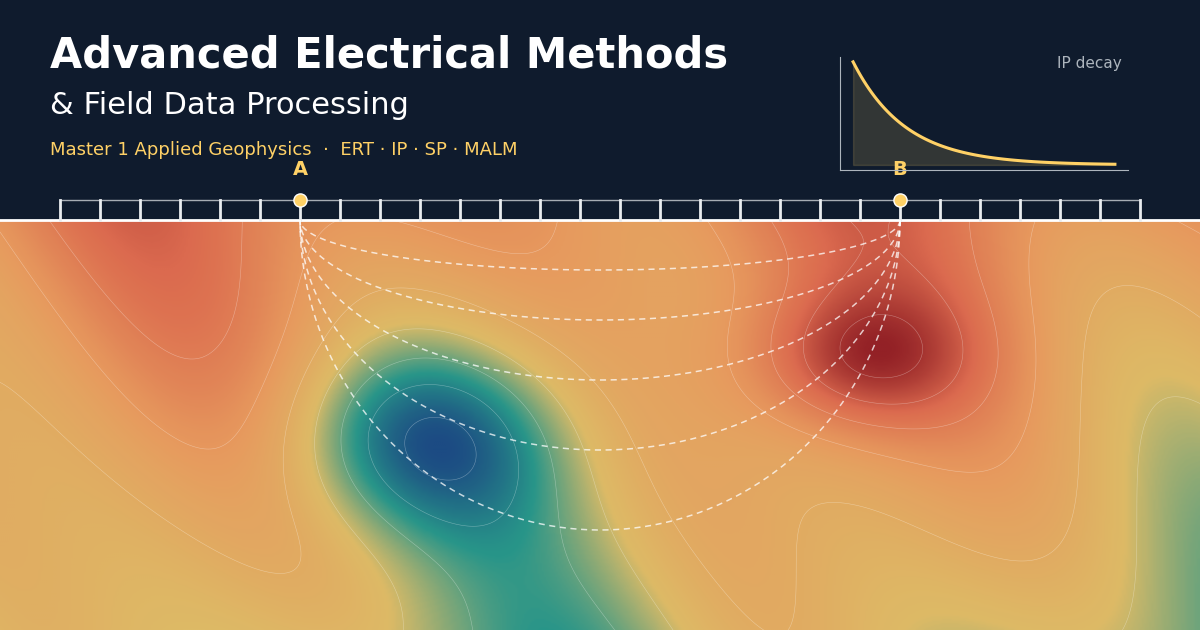
This course builds on what you learned about electrical resistivity in your bachelor's degree. This semester we go further in two directions. First, you will study complementary electrical methods: induced polarization, self-potential, mise-à-la-masse, and advanced ERT (3D, cross-hole and time-lapse). Second, you will learn to process real field datasets, from raw instrument files to reliable, well-interpreted models.
Each week combines a 1h30 lecture with a 1h30 practical session. All the software we use is free and open source, so please install it before the first practical; the syllabus gives the download links. Course materials, TP worksheets and datasets will be posted here each week, and the course forum is the place for your questions.
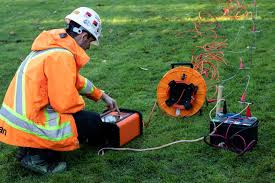
This course introduces undergraduate students in Applied Geophysics to the principles,
techniques, and field applications of electrical resistivity methods used in subsurface
investigations. Students will learn how to interpret the electrical properties of rocks and soils,
design and conduct field measurements, and process and analyze resistivity data for
geological, hydrogeological, and environmental purposes