Module Title
Animal Biology 1 (F1.1.2)
Semester
Semester 1
Credits and Workload
Credits: 6
Total workload (VHG): 82h30
– Lectures: 22h30
– Practical work: 45h00
– Personal work: included
Coefficient: 3
Assessment: Continuous Assessment (40%) – Final Exam (60%)
Course Instructor
Dr Redjeb Ayad, Lecturer (Maître de Conférences)
Faculty of Natural and Life Sciences
Department of Agronomic Sciences
Kasdi Merbah University, Ouargla
Course Objectives
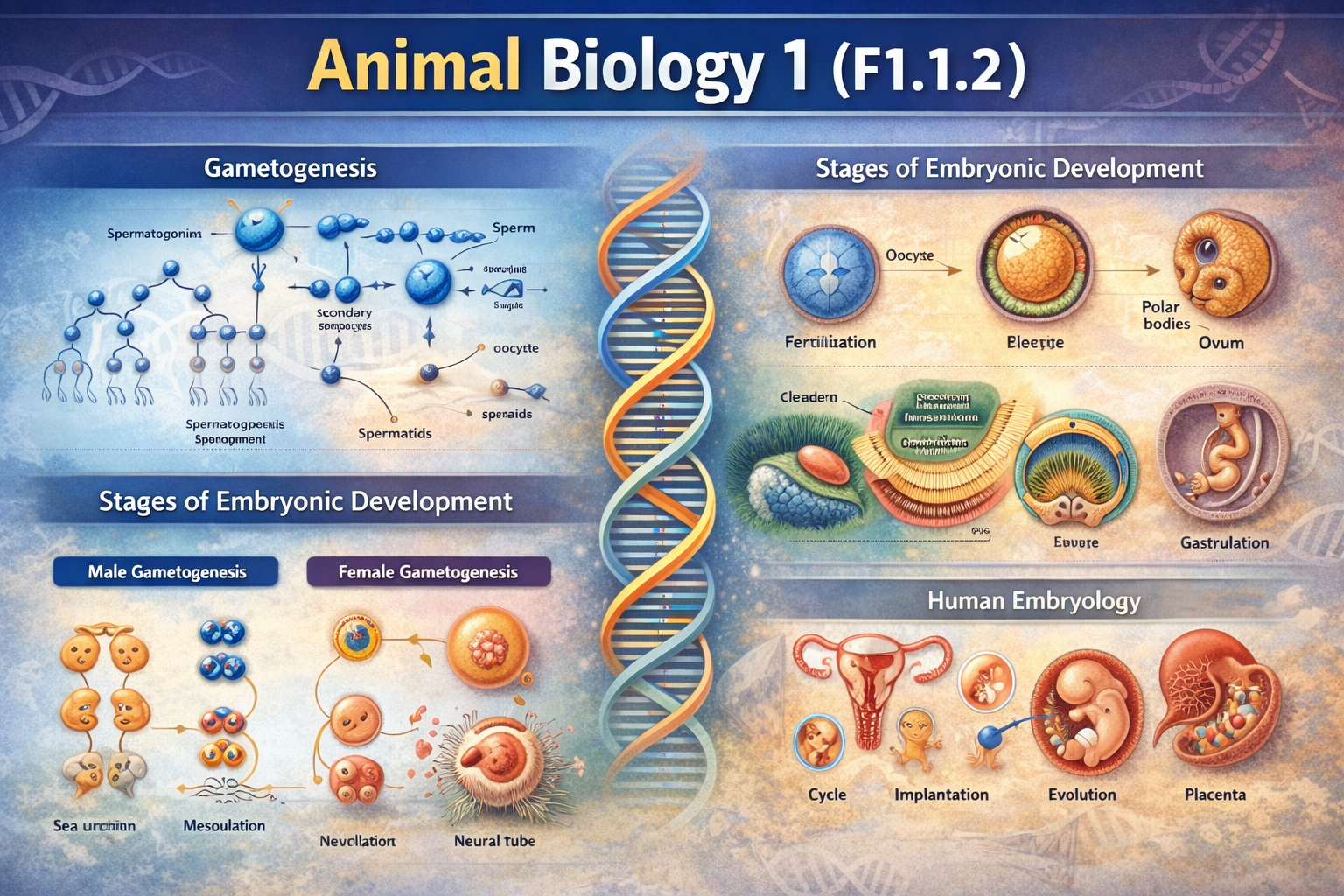
The objective of this module is to enable students to discover and understand the fundamental characteristics of developmental biology in certain animal species. It aims to provide the essential foundations related to the mechanisms of gametogenesis, fertilization, and the different stages of embryonic development, while highlighting comparative and applied aspects of animal and human embryology.
Recommended Prerequisites
Students should have basic knowledge acquired in secondary school in natural sciences, particularly in general biology and cellular organization.
Course Content (Lectures – V.H.: 22h30)
-
General introduction to developmental biology (3h00)
-
Chapter 1: Gametogenesis (4h30)
-
Chapter 2: Stages of embryonic development
-
Fertilization
-
Cleavage (Segmentation)
-
Gastrulation
-
Neurulation and fate of embryonic germ layers (6h00)
-
-
Chapter 3: Delimitation and embryonic membranes in birds (4h30)
-
Chapter 4: Specific features of human embryology (embryonic cycle, implantation, development, embryonic membranes, placenta) (4h30)
Practical Work (V.H.: 45h00)
-
Male and female gametogenesis
-
Fertilization and cleavage in sea urchins
-
Gastrulation in amphibians
-
Gastrulation in birds
-
Exercises and video materials on gastrulation and neurulation
-
Neurulation and embryonic membranes in birds
-
Exercises and video materials on human embryology
Assessment Methods
Assessment is communicated to students at the beginning of the semester and includes:
-
A final on-site semester examination (Final Exam): 60%
-
Continuous assessment: 40%, consisting of at least three components, including at least two conducted on site. Assessment components may include presentations, written quizzes, take-home assignments, personal work, tests, and reports. The nature and weighting of these components are determined by the teaching team.
Bibliographic References
-
André, S., 2013. Histology–Embryology: 600 Corrected and Commented MCQs, UE2. Ellipses.
-
Oudar, O., 2011. UE2: Cell and Tissues – Biology, Histology, Embryology. Maloine.
-
Mitchell, B., 2005. Embryology. Elsevier.
-
Foucrier, J., 2013. Atlas of Descriptive Embryology. Dunod.
- Teacher: Ayad REDJEB