
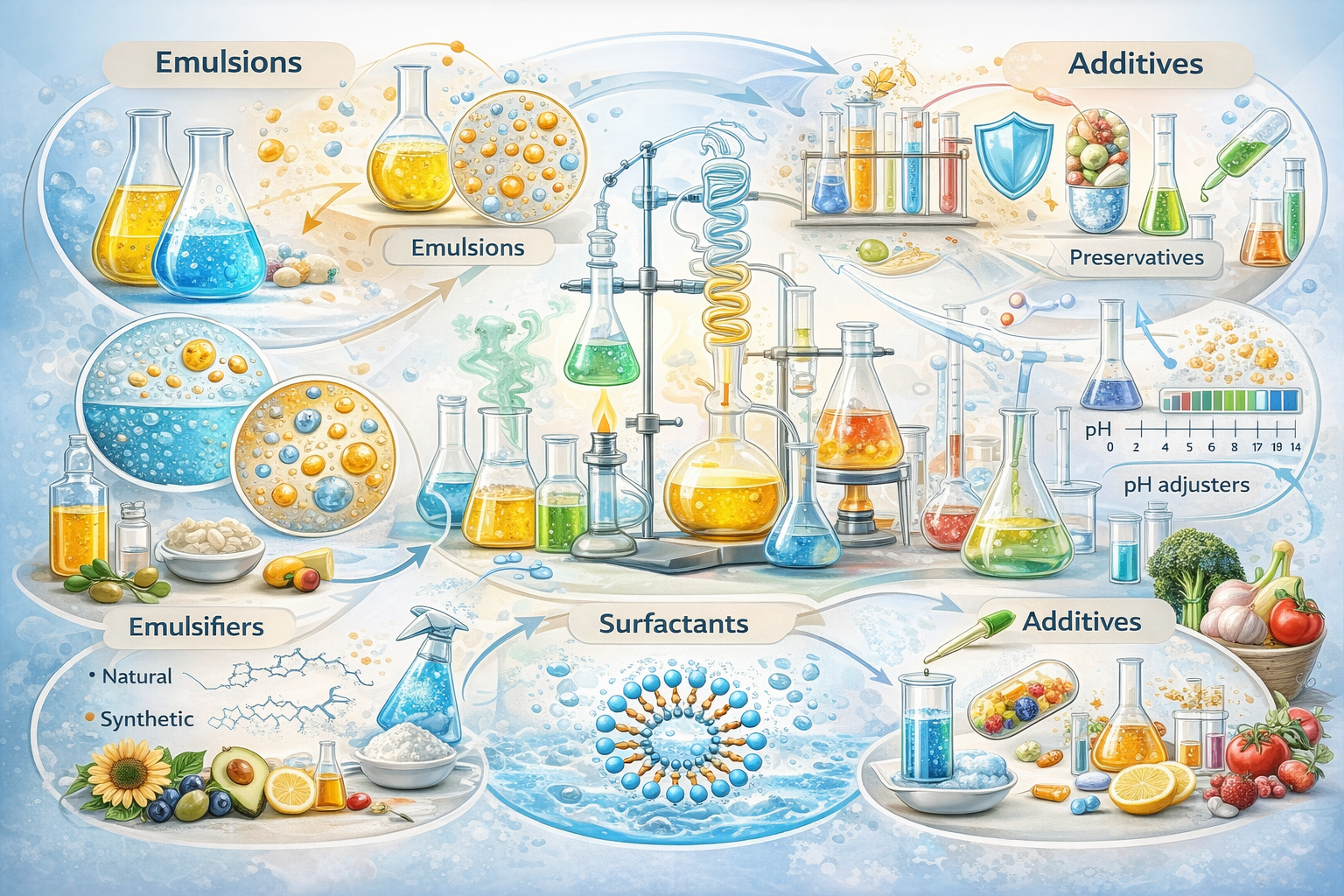
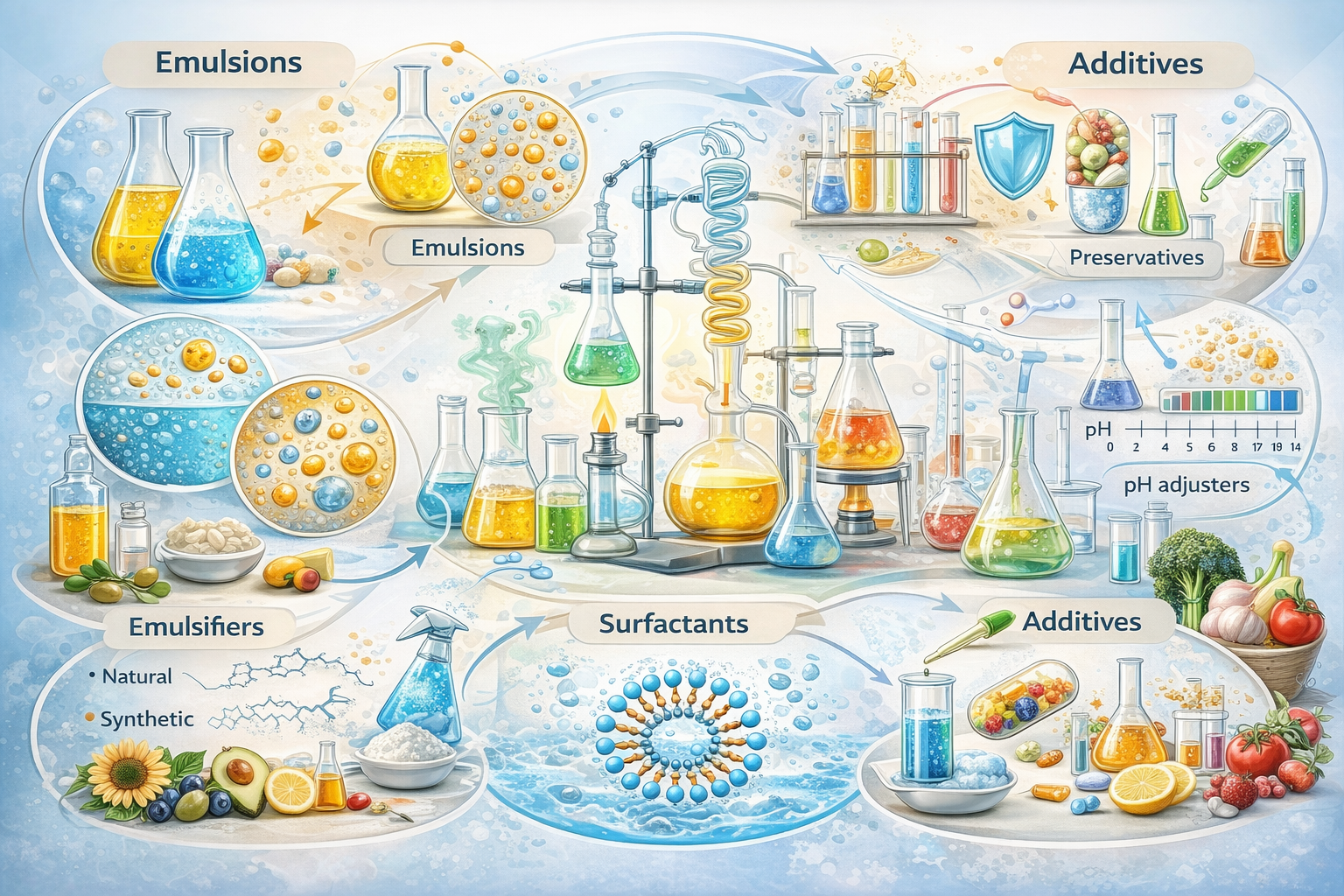
This course introduces the physicochemical foundations of cosmetic and food formulations, with a strong focus on the behavior of surfactants and the formation and stability of emulsions. Students will study amphiphilic molecular structures, classification of surfactants, and key interfacial phenomena at air–liquid, liquid–liquid, and solid–liquid interfaces. The course also covers structure–property relationships, including the influence of alkyl chain length on CMC and the Krafft point, as well as functional properties such as foaming, wetting, detergency, and emulsification. In the second part, learners explore emulsion systems, major instability mechanisms (creaming/sedimentation, flocculation, coalescence, phase inversion, and Ostwald ripening), and stabilization strategies for emulsions and microemulsions. Micellar solubilization, the effects of additives and pH, and key measurement methods are addressed to support formulation design and optimization in real applications.
- Enseignant: Khadra MOKADEM