
### Overview of Greenius and HOMER Software
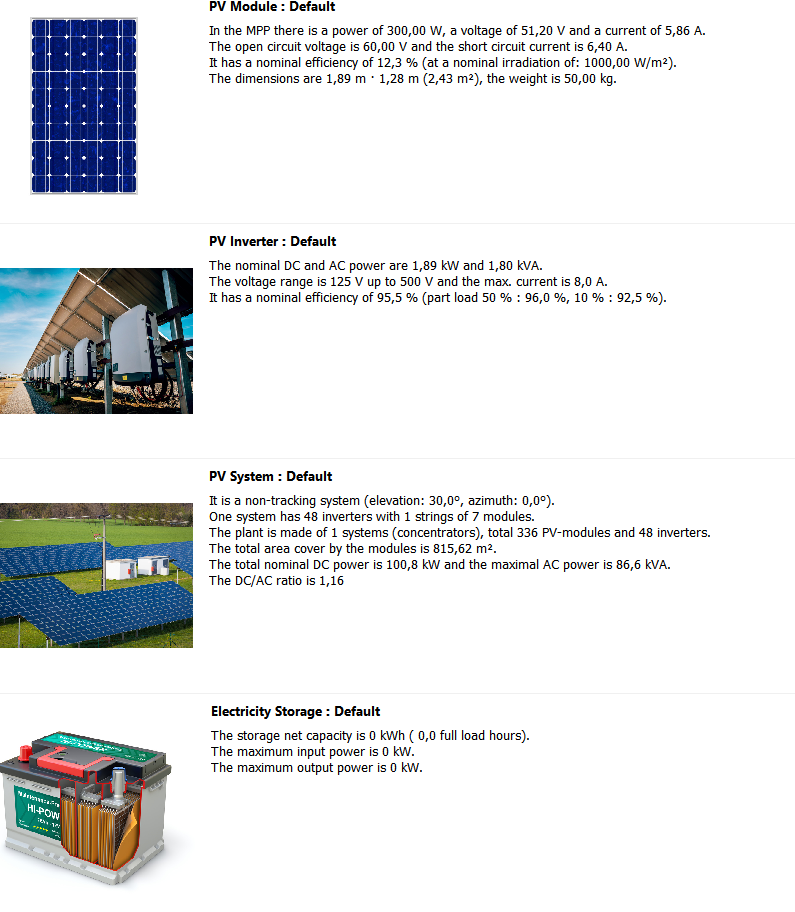
Based on your query, it appears you're asking about **Greenius** (likely a typo for "greenius") and **HOMER**, two specialized simulation software tools used in renewable energy projects. These are particularly relevant for modeling, sizing, and optimizing hybrid systems like solar thermal, photovoltaic (PV), wind, and storage integrations—aligning with electrical installations in sustainable energy contexts. Greenius focuses on detailed technical and economic simulations for concentrating solar power (CSP) and similar setups, while HOMER excels in hybrid microgrid design across diverse renewables. Below is a detailed comparison and summary.
#### Key Features Comparison
| Aspect | Greenius | HOMER (HOMER Pro/Front) |
|---------------------|--------------------------------------------------------------------------|----------------------------------------------------------------------------------------|
| **Primary Focus** | Simulation of CSP (e.g., parabolic troughs, solar towers), PV, wind parks, Dish/Stirling, and process heat/cooling. Integrates meteorological data for annual yield calculations. | Hybrid renewable/distributed generation systems, including PV, wind, hydro, biomass, fuel cells, batteries, and conventional generators. Supports microgrids, grid-tied, and off-grid setups. |
| **Simulation Capabilities** | Fast technical performance and economic modeling; uses hourly meteo data (e.g., from stations); handles one-minute resolution inputs for precise yield estimation (e.g., 50 MW solar tower output). Supports third-party data/maps integration. | Chronological optimization and sensitivity analysis; models real-world variables like fuel prices, load growth, battery degradation, and weather changes. Single-run feasibility for technical/economic viability. |
| **Target Applications** | Planning and installation of large-scale renewable power plants; energy efficiency audits for solar thermal and hybrid setups. | Microgrid design for utilities, industries, EVs, and remote sites; energy arbitrage, frequency regulation, and storage optimization. Used in over 190 countries by 250,000+ professionals. |
| **User Interface & Tools** | User-friendly for parameter manipulation and result analysis; extensible for solar cooling and process heat. | Intuitive for beginners; includes dispatch strategies for storage, renewable forecasting, and market participation (e.g., PPAs). Cloud-ready with training/support. |
| **Standards & Outputs** | Aligns with renewable energy goals (e.g., Germany's 60% renewables by 2050); generates production yields, costs, and emission reductions. | IEC-compliant for global use; outputs optimized designs, lifecycle costs, GHG reductions, and risk assessments. |
| **Developer & Availability** | Developed by DLR (German Aerospace Center); free/open for research, with extensions for custom projects. | Licensed by UL Solutions (from NREL origins); subscription-based (HOMER Pro for design, HOMER Front for storage). Free trials and advisory services available. |
| **Strengths** | Highly accurate for CSP-specific simulations; economical for process heat integration. | Versatile for hybrid systems; robust sensitivity for uncertainties; widely validated in academia/industry. |
| **Limitations** | More niche to solar thermal; less emphasis on grid-scale hybrids. | Can be computationally intensive for very large datasets; premium features require licensing. |
#### Use Cases in Renewable Energy Installations
- **Greenius**: Ideal for site-specific CSP projects, like simulating a solar tower's annual electricity yield using local weather data (e.g., 1-year meteo files from high-precision stations). It's used in feasibility studies for solar thermal plants, combining technical performance with economic viability.
- **HOMER**: Perfect for hybrid electrical installations, such as optimizing a PV-wind-battery microgrid for an industrial site or EV charging station. It evaluates scenarios like load shedding or renewable curtailment, helping reduce costs by up to 30-50% through least-cost optimization.
Both tools complement electrical sizing software (e.g., from your previous query on ER installations) by incorporating renewables into broader power system designs, ensuring compliance with standards like IEC 60364 while promoting energy transitions.
If this matches what you meant (or if it's something else like a course on these tools), let me know for more details—e.g., tutorials, downloads, or comparisons with tools like PVsyst/SAM!
- المعلم: MHAMED DERNOUNI